Bharat Farming Corporation
Farmer-first, science-led agribusiness!

Land aggregation, scientific farming, quality inputs and assured market linkage — all in one integrated model.

  • Block G, Bandra Kurla Complex, Bandra East, Mumbai - Maharashtra 400051.

  • Call us: 7600550845

  • Mail Support: info@bharatfarmingcop.com

  • Mon - Sat: 8.00am - 18.00pm

  • Address:

    Block G, Bandra Kurla Complex, Bandra East, Mumbai - Maharashtra 400051.

  • Phone:

    7600550845

  • Email:

    info@bharatfarmingcop.com

Bharat Farming Corporation

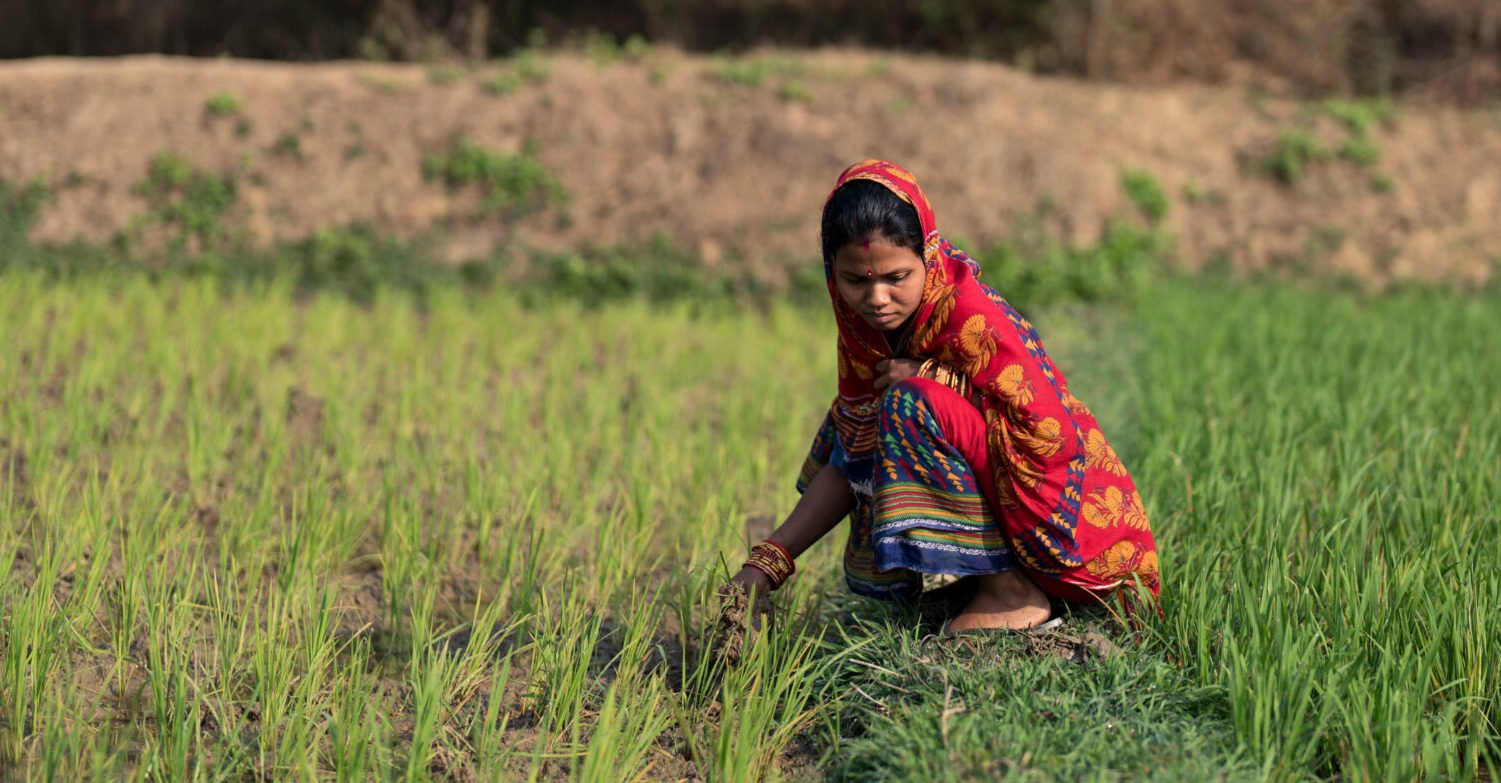
Every Crop Counts,
Every Indian Farmer Matters.

From land aggregation across Indian villages to scientific farming and assured market
linkage — we build a farmer-first, sustainable agribusiness for Bharat.

See Our Services

Bharat Farming Corporation

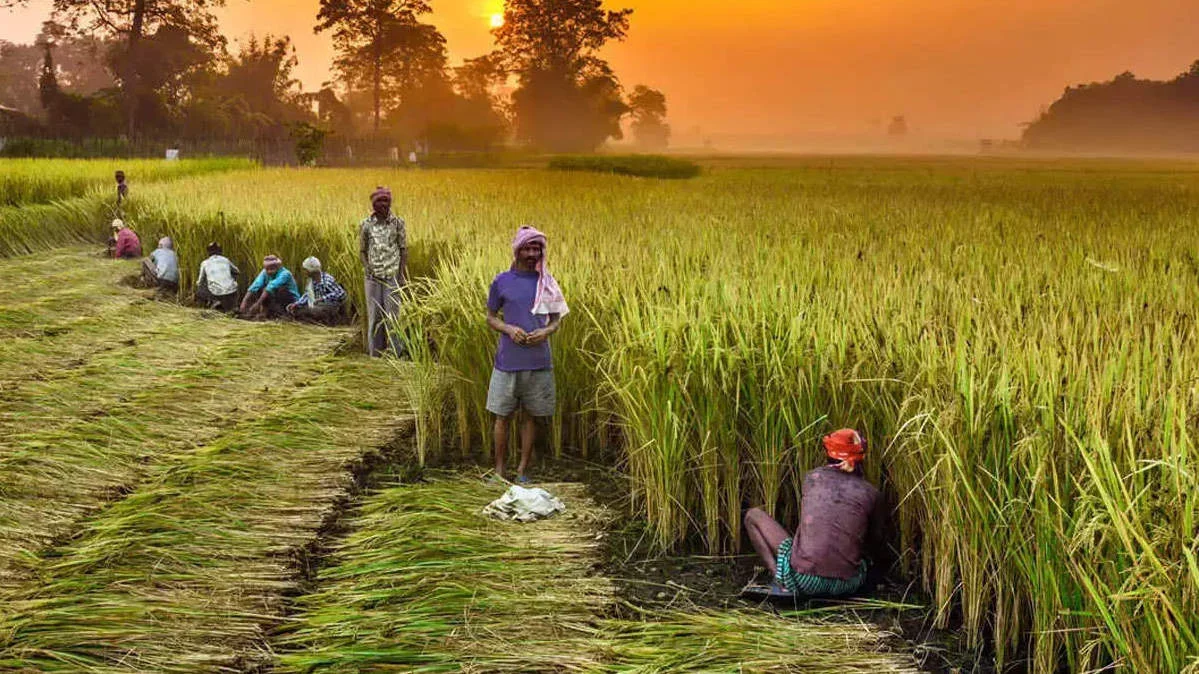
Science-Led Farming,
Assured Market Linkage.

Soil testing, precision agriculture, irrigation management and data-driven
crop planning — raising yields and reducing costs for Indian farmers.

See Our Services

Bharat Farming Corporation

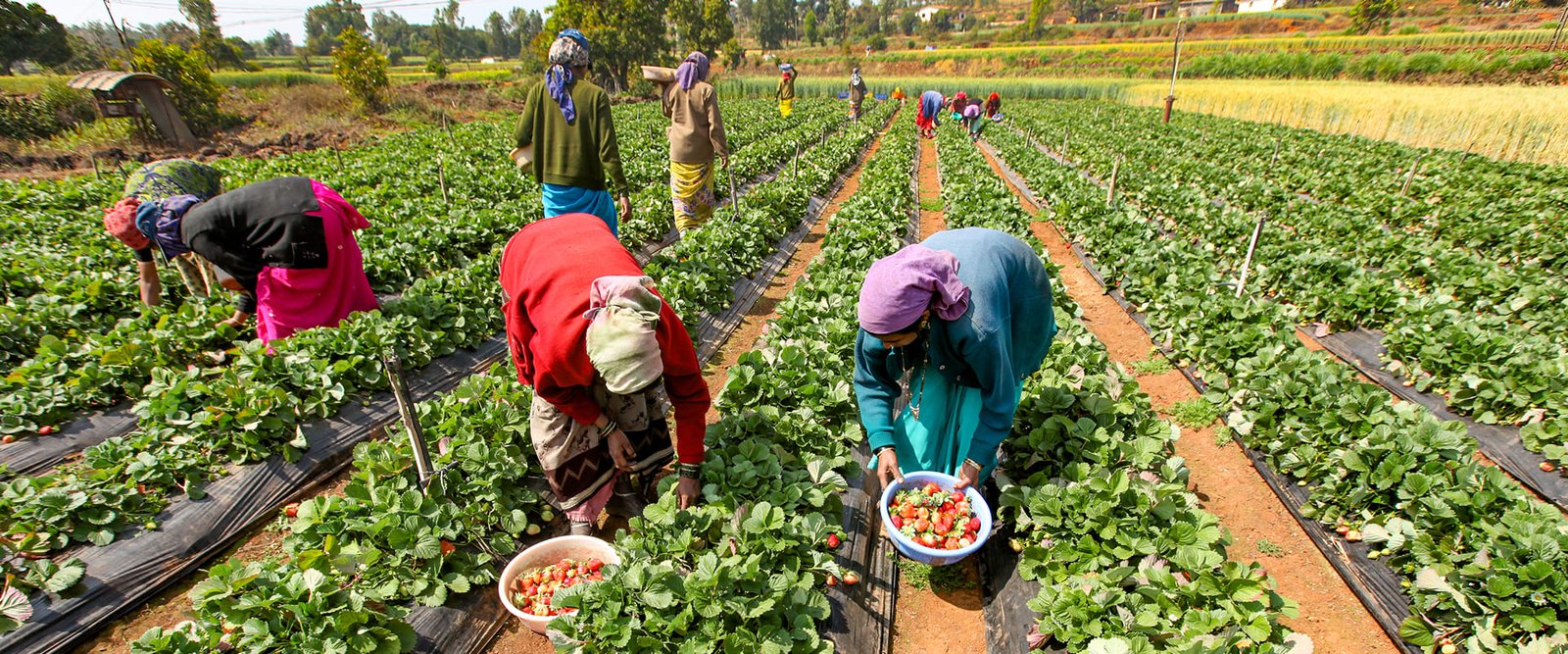
Grown Responsibly,
Sold Directly.

From grading and processing to branded Indian food products, exports and
carbon credits — creating new value and income for every farm.

See Our Services
Understanding The Crisis

Soil Salinity & Land Reclamation In India

Soil salinity is one of the most silent, slow-moving, and economically devastating forms of land degradation in India. Unlike a flood or a drought, salinity does not announce itself. It creeps into the soil gradually — season after season, irrigation after irrigation — until the land that once produced healthy harvests can no longer support even the hardiest of crops.

Across the Indo-Gangetic plains, the coastal belts of Gujarat and Tamil Nadu, and the arid and semi-arid regions of Rajasthan, Haryana, Punjab, Uttar Pradesh, and Maharashtra, millions of hectares of once-fertile farmland have already turned saline or sodic. Behind every hectare of salt-affected land is a farming family facing falling yields, rising input costs, mounting debt, and, in many cases, the painful decision to abandon the land their ancestors cultivated for generations.

Bharat Farming Corporation believes that soil salinity is not just an agricultural problem — it is a national challenge that demands a farmer-first, science-led, and ecologically responsible response.

More About Us →
Salt-Affected Land In India
6.73 M ha
ICAR & CSSRI estimate of saline and sodic land across Indian states — nearly the size of Punjab's total cultivable area.
  • 0.1–0.2 million hectares added every year
  • Yield losses up to 80–100% in severely affected soils
  • Major driver of farmer debt, land abandonment & migration
Read More →
Understanding The Science

What Is Soil Salinity?

A scientific explanation of salinity, sodicity, and why they matter for every Indian farmer.

Definition & Scientific Explanation

Soil salinity is the accumulation of water-soluble salts in the root zone of the soil at concentrations high enough to negatively affect plant growth, crop yield, and soil health. These salts include sodium chloride (common table salt), calcium sulphate, magnesium sulphate, sodium carbonate, sodium bicarbonate, and various other mineral compounds. When the electrical conductivity (EC) of the soil solution exceeds 4 deciSiemens per metre (dS/m) at 25°C, the soil is scientifically classified as saline.

Osmotic stress — the "physiological drought." When salt concentration in the soil solution is high, the osmotic potential of the soil water drops. This means plant roots must work much harder to extract water from the soil, even when the soil appears moist.

Ionic toxicity — direct chemical damage. Specific ions such as sodium (Na⁺), chloride (Cl⁻), and boron accumulate in plant tissues. Sodium damages cell membranes and interferes with potassium uptake. Chloride causes leaf burn and reduces photosynthetic efficiency.

Soil structure degradation — sodicity. When sodium ions dominate the exchange complex of clay particles, the soil aggregates disperse. The soil loses its porosity, becomes impermeable to water and air, and forms a hard crust when dry.

Key Facts At A Glance

  • 6.73 million hectares affected in India (ICAR & CSSRI).
  • 0.1–0.2 M ha added every year.
  • Worst-hit: Gujarat, Rajasthan, Haryana, Punjab, UP, Maharashtra.
  • Coastal seawater intrusion & inland irrigation salinity.
  • Yield losses 20–50% moderate, 80–100% severe.
  • Major driver of rural debt & migration.
Why Is Salinity Growing?

Reasons For Soil Salinity In India

Both natural and human-induced factors contribute. Agricultural practices are the biggest driver today.

Heavy Fertilization

Indian farmers often apply excessive chemical fertilizers — urea, DAP, MOP, and complex fertilizers — far beyond what crops actually need. India consumes over 60 million tonnes of chemical fertilizers every year, with nitrogen use efficiency often below 40%. The unused nitrogen and associated salts remain in the soil or leach into groundwater, accumulating year after year.

Drainage Issues

Poor or absent drainage is one of the biggest causes of secondary salinization in India. In canal-irrigated commands, excess irrigation water percolates down, raises the water table, and brings dissolved salts to the surface through capillary action. Large parts of the Indo-Gangetic plains in Punjab, Haryana, and Uttar Pradesh suffer from waterlogging and salinity.

Wrong Irrigation Methods

Flood irrigation, unlined canals, and the use of saline groundwater without proper management are major contributors. Over-extraction of groundwater in coastal areas causes seawater intrusion. In many parts of Gujarat, Rajasthan, and coastal India, groundwater salinity exceeds safe limits for irrigation, yet it continues to be used due to lack of alternatives.

The Growing Crisis

Every Year, Salinity Increases — And Farmers Suffer

India is losing productive farmland to salinity at an alarming rate. Behind every statistic is a farming family facing hardship.

Annual Increase In Salt-Affected Land

India loses an estimated 0.1–0.2 million hectares of productive agricultural land every year to salinity and sodicity. This is equivalent to losing the entire cultivable area of a small state annually.

The main drivers: heavy fertilization without organic correction, drainage issues and waterlogging, wrong method of irrigation (flood, saline groundwater), coastal seawater intrusion, and climate change with higher evaporation and erratic rainfall.

How Salinity Affects Indian Farmers

Yield losses of 20–50% moderate and 80–100% severe mean farmers harvest far less from the same plot. Higher input costs squeeze margins further. Reduced crop choices force farmers to grow only salt-tolerant crops.

Lower income and debt push families into debt traps. Land abandonment leads to fallow land and migration. Groundwater contamination makes water unfit for drinking and irrigation.

Solutions & Support

Government Initiatives & Budget For Soil Reclamation

The Government of India, along with state governments and research institutions, has launched several programs.

Major Government Initiatives

RKVY: Supports soil health, land reclamation, and climate-resilient farming. NMSA: Promotes sustainable farming and reclamation of degraded lands. CSSRI & ICAR: Research on salinity, sodicity, and reclamation technologies.

PMKSY: Funds micro-irrigation, watershed, and drainage improvements. State Schemes: Gujarat, Haryana, Punjab, UP, Rajasthan have subsidies for gypsum and drainage. Soil Health Card: Soil testing and nutrient recommendations.

Budget & Reclamation Methods

Union Budget allocations for soil health and reclamation have grown to ₹1,000+ crore annually under various schemes, with additional state matching grants and international funding (World Bank, ADB).

Proven methods: Gypsum application (replaces sodium with calcium), drainage installation (surface and subsurface drains), leaching and flushing (controlled irrigation to push salts down), salt-tolerant crops (barley, mustard, date palm, halophytes), and organic amendments (compost, green manure, biofertilizers).

Our Vision

Bharat Farming Corporation's Vision For Soil Reclamation

We envision a Bharat where no farmer is forced to abandon their land because of salinity. Our goal is to reclaim 1 million hectares of saline and sodic land by 2035.

Our Reclamation Targets

  • 1 million hectares reclaimed by 2035.
  • 500,000 farmers directly benefited.
  • 30% yield increase on reclaimed lands within 3 years.
  • Carbon credits for farmers through soil carbon sequestration.
  • Zero harmful chemicals — all methods are ecological and safe.

Methods Used By BFC

  • Integrated soil health mapping: Drone and lab testing.
  • Gypsum & organic amendments: Compost, biochar, green manure.
  • Precision drainage & irrigation: Subsurface drains, drip, sprinkler.
  • Agroforestry & halophytes: Tree-based systems, salt-tolerant plants.
  • Farmer training & FPOs: Capacity building, market linkage.
  • Carbon credit documentation: New revenue streams.
Work With Us

Consulting For Soil Reclamation

End-to-end consulting for farmers, FPOs, private partners, and government bodies — transparent, scientific, and farmer-first.

1. Assessment

Soil sampling, salinity mapping, water quality analysis, crop suitability assessment.

2. Reclamation Plan

Custom gypsum/organic doses, drainage design, irrigation scheduling, crop rotation.

3. Implementation

On-ground assistance, machinery, input sourcing, farmer training for proper execution.

4. Monitoring & Certification

Regular soil testing, progress reports, carbon credit documentation for farmers.

5. Market Linkage

Connecting reclaimed produce to processors, exporters, retailers, and buyers.

6. Ongoing Support

Agronomy advice, soil monitoring, access to new technologies and government schemes.

Frequently Asked Questions

Everything About Soil Salinity & Reclamation

Answers to the most common questions from farmers, FPOs, private partners, and government bodies.

Soil salinity is the accumulation of soluble salts (sodium chloride, calcium sulphate, magnesium sulphate) in the root zone, measured by EC > 4 dS/m. Sodicity is an excess of exchangeable sodium (ESP > 15). Saline soils have good structure but high salts; sodic soils have poor structure and poor infiltration. Many Indian soils suffer from both (saline-sodic).
According to ICAR and CSSRI, about 6.73 million hectares are affected by salinity and sodicity. Worst-affected states: Gujarat, Rajasthan, Haryana, Punjab, Uttar Pradesh, Maharashtra. Every year, an additional 0.1–0.2 million hectares are added.
Heavy fertilization: Excess chemical fertilizers leave salt residues. Drainage issues: Waterlogging brings salts to the surface. Wrong irrigation methods: Flood irrigation, saline groundwater, no leaching. Coastal seawater intrusion: Due to groundwater over-extraction. Climate change: Higher evaporation, erratic rainfall.
Yield losses of 20–50% (moderate) and 80–100% (severe). Higher input costs, lower income, reduced crop choices, debt, land abandonment, and migration. Groundwater contamination makes water unfit for drinking and irrigation, causing rural distress.
Key initiatives: RKVY, NMSA, CSSRI & ICAR, PMKSY, Soil Health Card, State Schemes in Gujarat, Haryana, Punjab, UP, Rajasthan. Union Budget allocations for soil health and reclamation have grown to ₹1,000+ crore annually, with state matching grants and international funding.
Integrated soil health mapping: Drone + lab testing. Gypsum & organic amendments: Compost, biochar, green manure. Precision drainage & irrigation: Subsurface drains, drip, sprinkler. Agroforestry & halophytes: Tree-based systems, salt-tolerant plants. Farmer training & FPOs: Capacity building. Carbon credit documentation: New revenue streams. All methods are ecological, non-harmful, and farmer-friendly.
Yes. Time depends on severity, soil type, water availability, and methods. Moderate salinity can be reduced within 2–3 cropping seasons; severe cases may take 3–5 years. BFC's integrated approach aims for measurable improvement within the first year and full reclamation within 3–5 years.
Contact BFC through our website or visit our office. Our process: (1) Soil assessment and salinity mapping, (2) Customized reclamation plan, (3) Implementation support and farmer training, (4) Monitoring, certification, and carbon credit documentation, (5) Market linkage for reclaimed produce. Flexible engagement models for all scales.
No. All BFC methods are ecological, non-harmful, and farmer-friendly. We do not use toxic chemicals. Our approach relies on scientific gypsum doses, organic amendments, precision irrigation, agroforestry, and farmer training — restoring soil health without harm.
Reclaim 1 million hectares of saline and sodic land by 2035, benefiting 500,000 farmers directly. Targets: 30% yield increase within 3 years, carbon credits for farmers, zero harmful chemicals, and market linkage for reclaimed produce. Restoring land — and restoring hope, dignity, and prosperity for India's farmers.
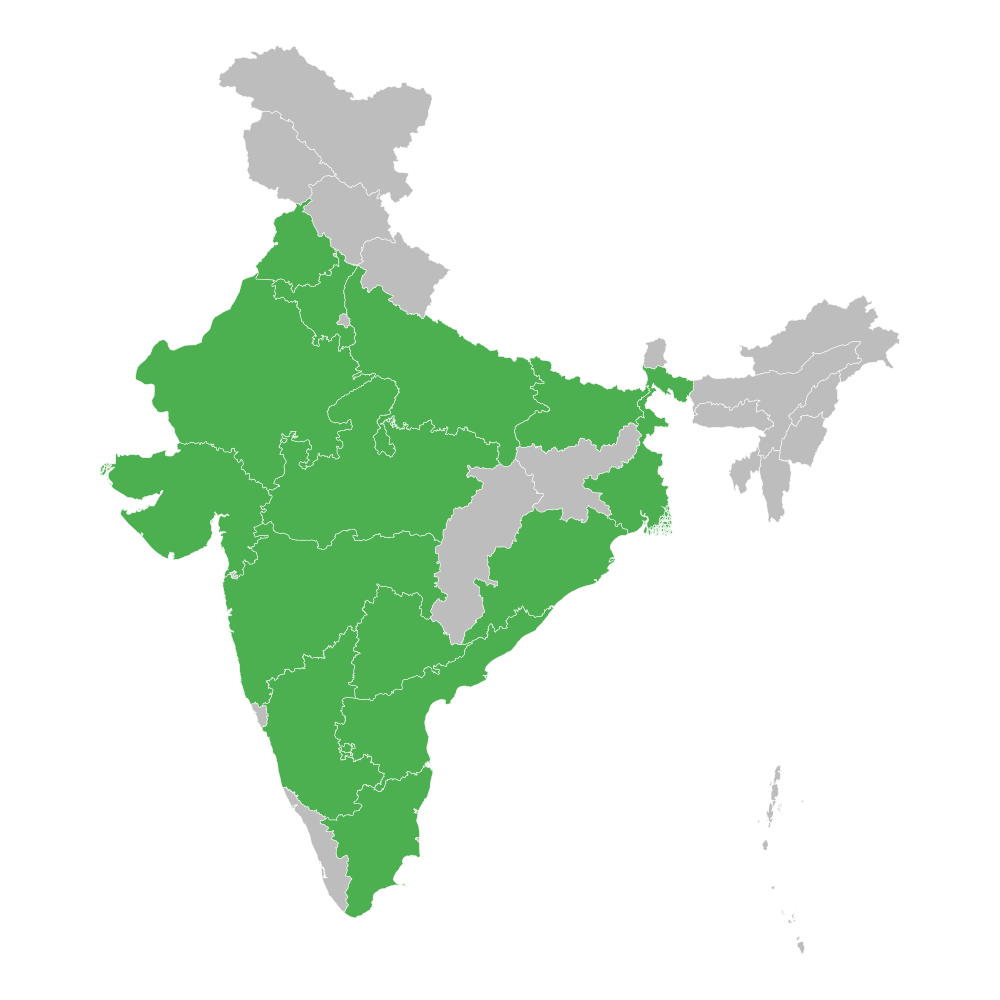
Salt-Affected Soil In India

Mapping India's Salinity Crisis

Over 6.73 million hectares of Indian farmland are affected by salinity and sodicity. Hover over any marker to see the affected area and severity for that state.

India map showing salt-affected states

Why This Map Matters

Salinity is quietly eating into India's farmland — every year, an extra 0.1–0.2 million hectares are lost. The worst-hit states are in the northwest (Punjab, Haryana, Rajasthan, Gujarat) and along the coast (Gujarat, Tamil Nadu, Andhra Pradesh).

  • Severe — over 1 million ha affected
  • Moderate — 0.2 to 1 million ha
  • Affected — under 0.2 million ha
6.73 M ha
Total Salt-Affected
0.1–0.2 M ha
Added Every Year
20–100%
Yield Loss Range
6 States
Most Severely Hit
Learn About Our Reclamation Work →
Let's Cooperate Together

Ready To Reclaim Your Land?

Whether you are a farmer, FPO, private partner, or government body — Bharat Farming Corporation is here to help you reclaim saline and sodic land using ecological, non-harmful, and farmer-first methods.

Contact Us Today →